
Find Who Owns a Buckingham Property
Ownership work in Buckingham runs from location to record. An address can place land on the county's InteractiveGIS map, though the public view opens with access terms and a sign-in before showing details. The Commissioner of Revenue keeps the assessment data. Recorded transfers live in the Circuit Clerk's deed index. Treat the map as a locator and the latest deed as the stronger proof that a parcel changed hands. No single office label gives a full title answer, so the steps here move from one record to the next.
- Locate the Buckingham parcel by its road address in InteractiveGIS and copy its Map# or PIN if shown.
- Ask the Commissioner of Revenue for the assessment owner name tied to that parcel.
- Search the Circuit Clerk's grantor-grantee records for the newest conveyance and compare its legal description.
- If the grantee is an LLC, corporation, or estate, follow that exact legal name in the proper filing record.
Buckingham Owner Fields Need Confirmation
The Commissioner of Revenue is the assessment office for Buckingham. The county publishes no separate public assessor search form or online parcel card, so the owner-of-record label, mailing address field, last-sale date, and update schedule must be confirmed by asking. InteractiveGIS is the one public property-search route. Its open screen does not display a selected parcel. Treat any name from a live map or tax roll as a lead. The deed backs it up or it does not. Call the Commissioner at 434-969-4972 with a street address or parcel key. Ask what the office can verify directly. If the address will not resolve, separate the physical situs from the tax mailing address. The county's Commissioner page names the office and describes its role.
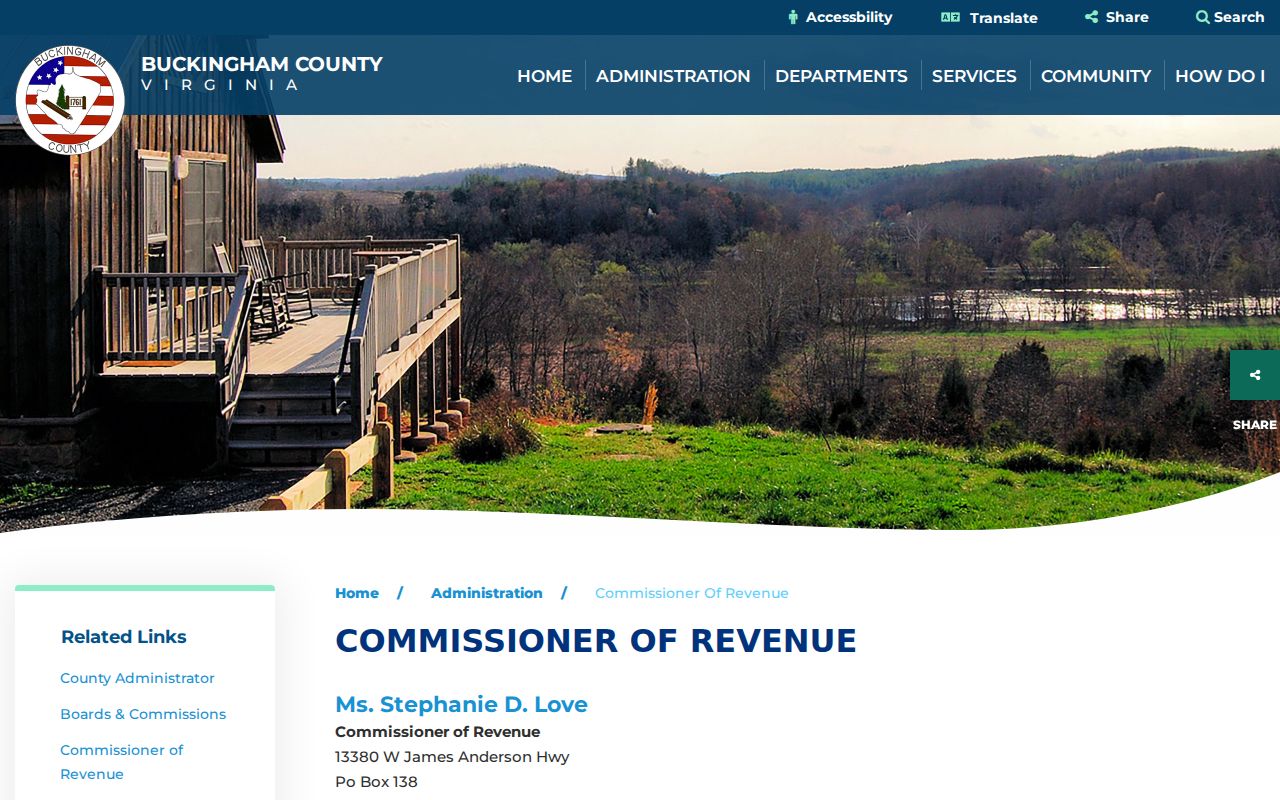
The capture shows the county assessment office, not a named owner's parcel card.
Where Buckingham Ownership Appears
Buckingham records name people for different reasons. A deed names the grantee in a transfer, while the assessment roll supports tax administration. GIS places a parcel on the map. Entity filings may explain a corporate name, but they never replace the deed itself.
| Source | Owner Info It Gives | Access |
|---|---|---|
| Commissioner of Revenue | Assessment information; owner field not captured online | County office |
| Circuit Court Clerk | Grantee named in the recorded deed | Counter; SRA availability not confirmed locally |
| InteractiveGIS | Parcel geography; selected owner card not inspected | Public terms screen, live map requires session |
| Virginia SCC | Entity filing and registered-agent context | Public search page; cookie gate encountered |
The owner of record is simply the party named in a record. That person may not occupy the land. They may not receive mail there either. A tax notice can go to a PO box, an estate, or an out-of-county address. Never read an owner field as proof of who lives at the parcel.
Confirm a Buckingham Owner by Deed
The latest recorded deed is the best public check on a recent transfer. Buckingham's Circuit Court Clerk indexes grantors and grantees. A recorded deed can include the parties, consideration, tax-map or PIN reference, return address, and legal description. The county does not publish its exact online index fields or digital coverage year. Ask the Clerk to search both party roles. Also ask for the recording reference so the instrument can be read in full.
The statewide Secure Remote Access page requires local clerk registration. It limits service to select courts. Whether Buckingham is enabled, which years are covered, and whether images are free are not stated. Use the courthouse counter or a focused written request if the online route stalls. Buckingham's Clerk page lists the local record custodian and courthouse contact.
Separate Buckingham Situs and Mailing
A rural parcel may carry no street number at all. The tax roll may list a mailing address far from the land. The situs points to the physical property. The mailing address only routes the notice. A PO box or servicer address says nothing about who resides there. When the GIS address and the tax notice disagree, ask the Commissioner which field is the situs. Then compare the parcel key with the recorded instrument. No exhaustive ZIP list, county E911 lookup, or public renumbering project is published. Buckingham, VA 23921 appears on several office addresses. That alone does not mean every road parcel shares the ZIP. USPS can validate a postal address. County GIS and the deed establish the land record.
Read Buckingham LLC and Estate Names
When an LLC takes title, copy the exact entity spelling from the deed. Virginia's SCC Clerk's Information System can supply filing and registered-agent context. It sits behind a consent gate, though, and does not publish its search fields. A registered agent is a contact for the entity. That agent is not necessarily the person who owns or occupies a given parcel. Estate transfers raise other questions. Look for an executor's or administrator's deed, a fiduciary file, or a probate order. The Circuit Clerk holds both probate and land records. A will, death record, or family tie alone does not prove title passed to a particular heir. Match the parcel's legal description to the actual conveyance. The Virginia SCC entity-search page is the state route for corporate names.
The screenshot records the consent gate only, not a specific LLC filing.
Respect Buckingham Protected Addresses
Some Virginia records carry real limits. Protected addresses are one of them. Voter lists fall under special statutes. Anyone enrolled in the Address Confidentiality Program may simply not show up in ordinary outputs. That is by design. Ask the responsible custodian how to follow the proper process. Never try to work around a protected address by piecing together unrelated records.
The Virginia Freedom of Information Act covers existing public records. It includes exclusions and special rules of its own. A focused request to Buckingham should name the record sought. It should not ask an office to infer where a private person lives. Sound property research confirms what is recorded about a parcel. It does not establish residency or invite contact. Virginia voter information explains the state portal and its access cautions.
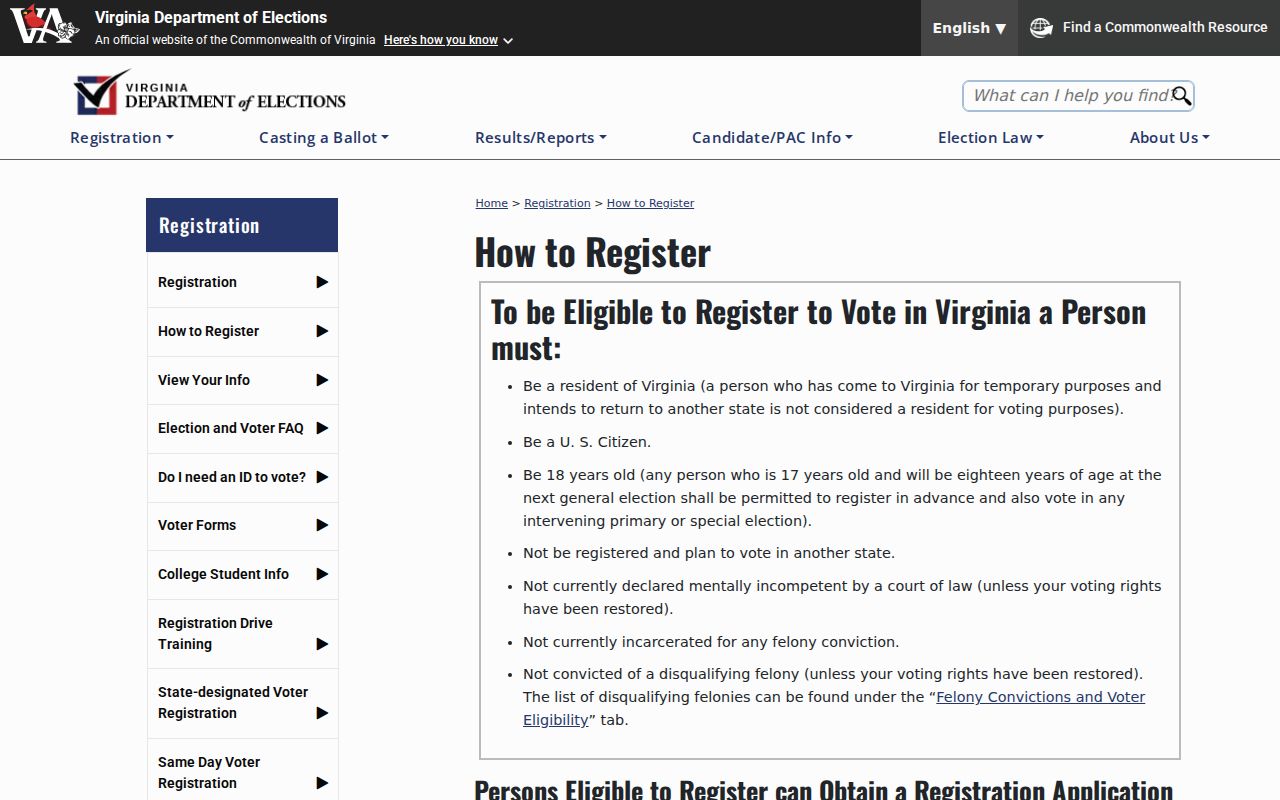
The captured state page explains voter-information access; it is not a property-owner search.
Dillwyn Ownership Still Uses County Records
Dillwyn is the only incorporated town in Buckingham County. Its charter dates to 1912. An 1818-style boundary survey was never the point. A 1918 act authorized a boundary map instead. Neither document creates a separate deed index or assessor system. A Dillwyn parcel still routes through county channels. The Circuit Court Clerk holds any recorded conveyance. The Commissioner of the Revenue carries assessment information, and the Treasurer issues the bill.
Older town deeds sometimes cite a road or railway call. Preserve that wording exactly, then compare it with the modern parcel and the charter. The historic boundary is not the current lot line. When a title question arises, the answer still turns on the deed and its legal description. The Virginia Dillwyn charter records the town boundary and the 1918 map provision.
Check Buckingham Owner Names Against the Instrument
A name on a county assessment page may not match the deed. Spelling gets shortened or reformatted. Initials, suffixes, a spouse, a trust, or an estate can all change how a search appears. Preserve the exact name on the instrument. Treat likely variations only as leads. A shared surname proves nothing. The county publishes no complete public owner-name index for Buckingham parcels.
Start with the parcel description or Map# when you have it. Then ask the Commissioner of the Revenue how the assessment owner field is maintained. Ask also which date the displayed information reflects. The Circuit Court Clerk can identify the deed recorded for the land. If the two names differ, hunt for a later deed, a probate transfer, or an entity filing that explains the change. Never assume a person lives at the situs address because the tax mailing carries that name. Mailing and physical location are separate records.
Separate Buckingham Assessment From Legal Title
The Commissioner of the Revenue keeps the assessment that supports taxation. It identifies the person or entity on the tax roll. But it is not the instrument that conveys ownership. The Circuit Court Clerk records deeds and other land instruments. A tax statement, GIS label, or payment account can lag behind a recorded transfer. It can even display a return address. That address may belong to someone other than the current title holder.
When a name conflict matters, put three things side by side. Compare the assessment year, the deed's recording date, and the legal description. Ask the Commissioner whether the roll reflects the transfer. Then ask the Clerk for the recorded deed and any later instrument. A tax bill may go to one party. Meanwhile a recorded deed vests an interest in another. That split does not signal an error by itself. It is simply a reason to keep both records labeled by source and date.
Trace Buckingham Trusts and Estate Transfers
A current owner entry may not name an individual. It may instead list an LLC, trustee, estate, executor, or heirs. Read the grantee wording in the deed exactly as recorded. A Virginia State Corporation Commission entity search can clarify an organization's legal name. It can also reveal the registered agent. That filing helps interpret a deed name. It does not prove a parcel interest.
For an estate chain, the Circuit Court Clerk also keeps probate and estate material. A will, an obituary, or a family relationship may explain why to search a name. But only the land instrument connects the interest to a specific legal description. Ask for the relevant probate index or public file. Compare any transfer against the parcel's deed reference. Some of this history is not searchable remotely. A records request to the Clerk may be the practical route for Buckingham County.
Limits of a Buckingham Owner Lookup
A Buckingham ownership lookup has limits. It can identify a recorded party, but not more. It cannot prove who lives at the property. It also cannot confirm whether the title is marketable, or whether every lien has been released. Names can belong to an LLC, an estate, a trustee, or a group of owners. The newest deed and its legal description are stronger evidence of a transfer than any map label. However, a full title search still requires broader review.
Lawful use. Use owner information for property, title, tax, and historical research. Do not use a public address to stalk, threaten, or harass anyone, and do not treat a mailing field as permission to approach a person.