
What a Buckingham Deed Records Search Finds
Every recorded instrument names the party who conveyed an interest and describes the land involved. The deed type adds context. Yet the label alone settles nothing about title. Later releases may sit elsewhere in the books. Among the instruments the Buckingham Clerk can locate are deeds, deeds of trust, easements, judgments, and liens. The office publishes no complete online list of its index categories.
| Deed Type | What It Does | Common Use |
|---|---|---|
| General warranty | Conveys the described interest with the deed's stated warranties | Sale transfer |
| Special warranty | States narrower warranties in the instrument | Some transfers |
| Quitclaim | Transfers whatever interest the grantor holds | Interest cleanup or family transfer |
| Trustee or fiduciary | Shows a transfer by a named trustee, executor, or administrator | Trust or estate matter |
| Correction, gift, or partition | Changes, gives, or divides a described interest | Correcting or reorganizing title |
A deed moves an interest in land. A deed of trust, easement, judgment, or lien does something different. It records a claim or a burden on the property instead. Read the full instrument, the legal description, and any later releases before drawing conclusions. The Buckingham Clerk also holds plats and judgments. One deed search often opens doors to related records that were never deeds at all.
Buckingham's Recorder Is the Circuit Clerk
The Buckingham County Circuit Court Clerk wears two hats. The office serves as recorder. It also handles probate and court business. Deeds, plats, judgments, UCC filings, wills and estate files, marriage licenses, and historic records all fall under the office. The clerk's page names Justin D. Midkiff and lists the courthouse at 13061 West James Anderson Highway, Buckingham, Virginia 23921. For a transfer question, inspect the recorded document itself rather than a GIS owner label.
Call 434-969-4734 during weekday office hours, 8:30 a.m. to 4:30 p.m. Ask about searching an index, using a public terminal, or requesting a copy. The county publishes no local copy-fee schedule online. Ask the fee and whether a plain or certified copy is available before paying.
The official Circuit Clerk page describes the land-record and historic-record duties.
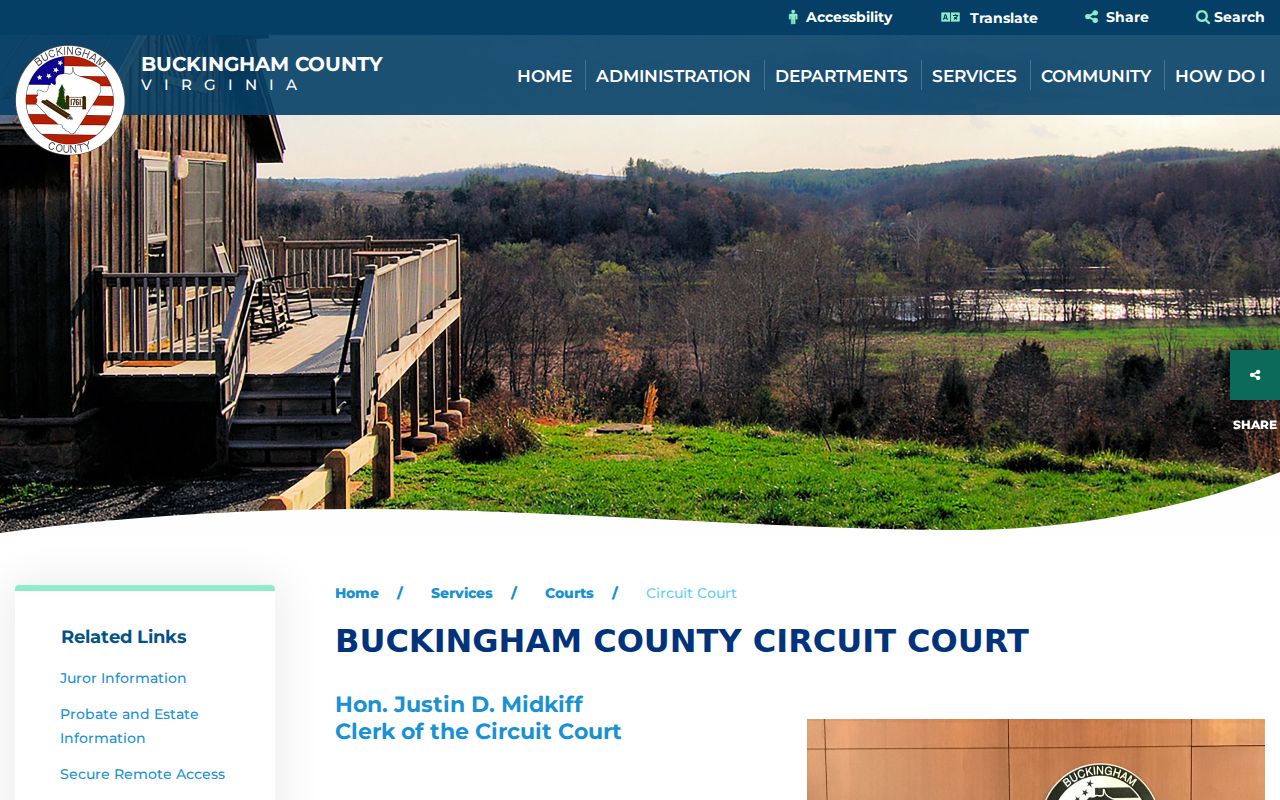
The office capture identifies the local custodian; it does not display a deed result.
Follow Buckingham's Grantor-Grantee Index
Virginia indexes land records by the parties to each instrument. The grantor transfers. The grantee receives. Begin with a name from a recent deed. Then follow the parties and references one transfer at a time. Search each role separately. A person can show up first as grantee and later as grantor. An estate or LLC may carry a legal name that differs from the family name you expect.
The state describes Secure Remote Access for select circuit courts. It requires registration through the local clerk. Whether Buckingham participates is a question the clerk can answer. The same goes for which years or images the service covers. Treat the landing page only as a gateway. It is not a live Buckingham deed index.
- Find the latest conveyance and note its recording date, parties, book/page or instrument reference, and legal description.
- Read the prior grantor from that deed, then search the same name as a grantee in an earlier conveyance.
- Compare the legal descriptions and acreage at each step; names alone may link the wrong tract.
- When the online record ends, use the Clerk's index or the relevant LVA book and microfilm guide.
- Grantor
- The party who conveys an interest in the instrument.
- Grantee
- The party who receives the interest described.
- Chain of title
- The linked sequence of recorded transfers for the same land.
- Book/page or instrument number
- A clerk reference used to retrieve a recorded document; ask which form Buckingham uses for a specific entry.
What the Buckingham Remote Index Reveals
The statewide portal does not display a Buckingham result screen without local registration. The table below records what the county documents and what remains a question for the clerk. An unconfirmed field is safer than a promised parcel search the county has never described.
| Index item | Evidence available | How to proceed |
|---|---|---|
| Grantor and grantee | Party indexing is required; local search labels not captured | Search both roles or ask the Clerk |
| Locality | Statewide service describes locality selection | Choose Buckingham if offered |
| Recording date | Exact range field not verified | Use a year span when requesting a search |
| Document type | Local dropdown not located | Name the likely instrument to the Clerk |
| Parcel/PIN | Cover sheet may carry tax map reference | Do not assume it is searchable online |
Virginia SRA land-record access requires local clerk registration. The landing page itself shows no Buckingham document or fee.
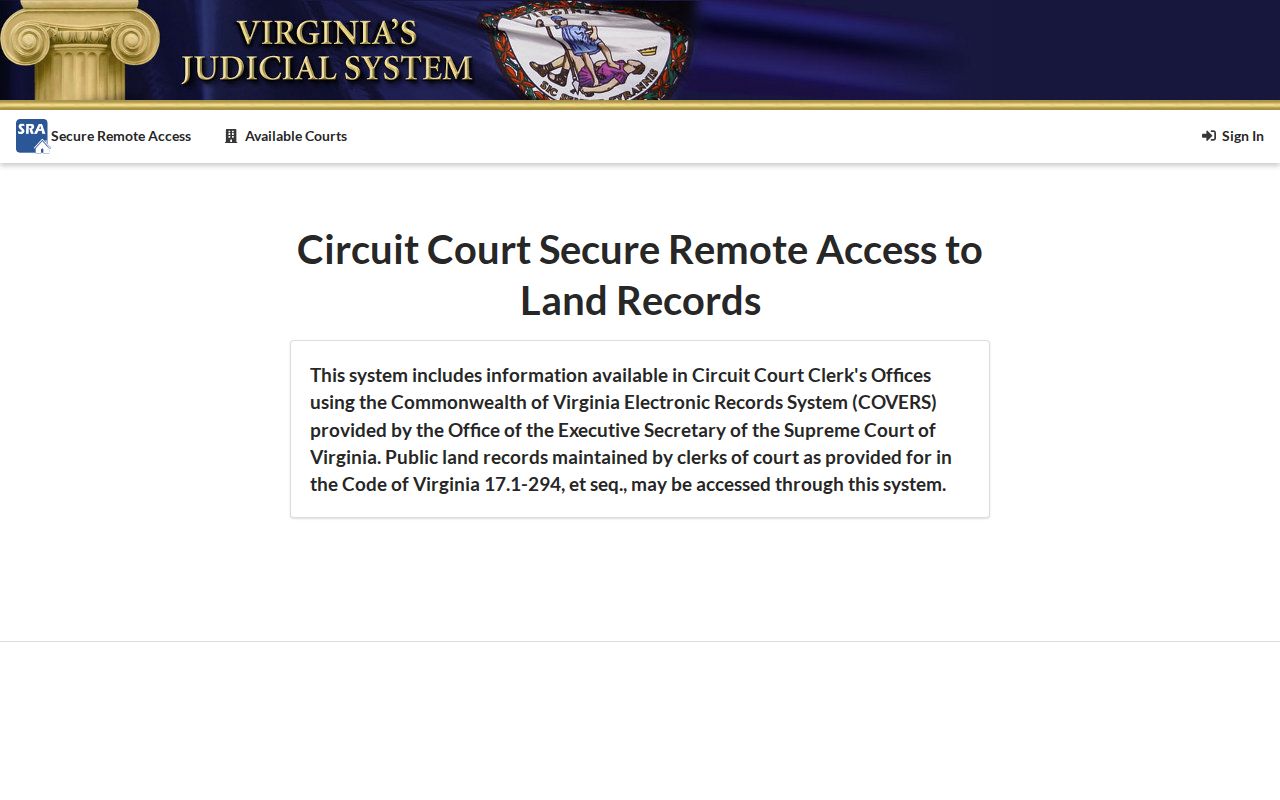
Use the SRA page to ask about availability, then confirm local coverage directly.
Buckingham Deed Books Begin After the Fire
A courthouse fire in 1869 destroyed the earlier records. The Library of Virginia's guide lists Buckingham Deed Book 1 covering 1869–1872. The series runs through Book 10 for 1899–1901. A post-fire index survives for deeds and wills from 1869–1904. Those dates explain why an old ownership chain can simply stop. Even a modern parcel is easy to trace.
LVA microfilm holdings also include grantor and grantee index runs from 1869 into 1959. Grantee Volume E carries an incomplete 1908–1949 segment. Check later years and missing spans with the Clerk, neighboring jurisdictions, and Albemarle parent-county material. Try other land records too. Do not assume anything was lost or complete.
The Buckingham LVA holdings page is the current finding-aid route.
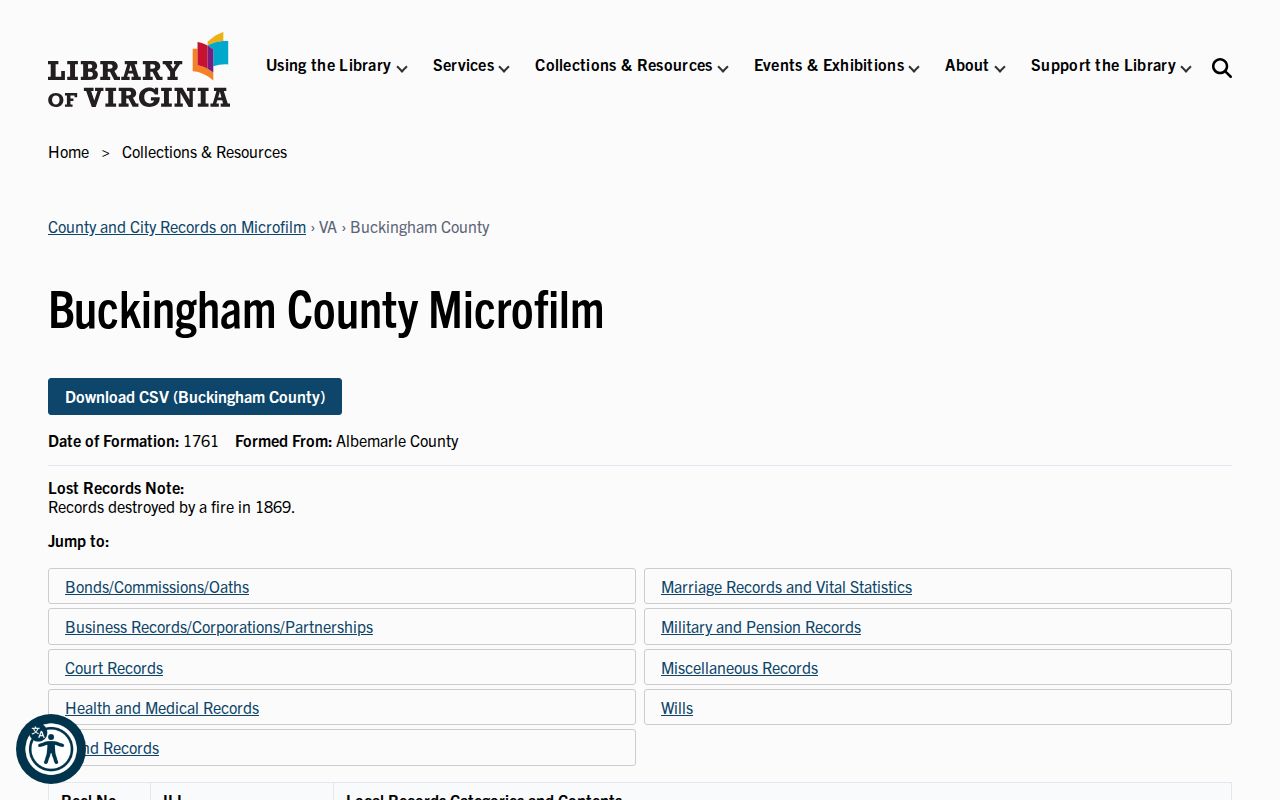
Note: The listing shows record runs, not a promise that every book is searchable online.
Dillwyn's 1918 Map Is a Deed-Book Lead
Dillwyn's 1912 incorporation charter defines a boundary. It ties that line to Old Bell Road, Sand Clay Road, and the Chesapeake and Ohio Railway. It also authorizes the 1918 R.N. Clark boundary map for recording in the Buckingham Circuit Clerk's deed book. That creates a specific bridge from town history into land records. A historic deed may name a road or railway that no modern street label matches.
For a Dillwyn property, compare two things. Set the current county parcel against the charter calls and the recorded map. The town line is not a separate title system. Deeds, tax, assessment, and GIS records stay with the county. Town ordinances and minutes remain municipal. The official Dillwyn charter supplies the boundary text and the map authorization.
Request a Buckingham Deed Copy
Lead with your strongest references. The latest instrument number, both party names, and the exact legal description let the Clerk pull the right deed quickly. The Circuit Clerk page posts a phone and courthouse location. No copy or certification prices are published. Ask instead whether the document is available at the counter, whether a certified copy can be issued, and what payment the office accepts. If the entry is unclear, narrow the years.
Older material works differently. The LVA catalog identifies microfilm series that may help, but it serves as a finding aid rather than an online ordering promise. Not every instrument is exposed remotely. A counter visit, written request, or records request may still be required. Keep the book/page or instrument reference with your title notes so the next Buckingham property search starts from a confirmed record.
Recorded, not guaranteed. Buckingham deed records show instruments placed in the public record, not every possible interest or legal defect. A title professional must examine the chain before a transaction relies on clear ownership.
Check the Buckingham Chain One Transfer at a Time
A chain of title is simply a sequence of recorded transfers. Each one is tied to a single land description. Start with the newest deed you can identify. Copy the exact legal description and the parties. Then follow the grantor backward through the prior instrument, one transfer at a time. Expect name changes along the way. Marriage, an estate, a trust, or a business reorganization can alter a seller's name. A plain spelling variation can do the same. Treat those links as questions to verify. Never assume that similar names mean the same person.
For each instrument, record the execution and recording dates separately when both appear. A deed's signing date is not always its recording date. A later deed may convey only a partial interest or reserve an easement. A release can change how the earlier deed reads. Buckingham offers no county title abstract, and no online name index promises a complete chain. Ask the Clerk how to inspect the referenced book or image. Consult a title professional whenever ownership depends on completeness.
Carry Book and Page References Forward
When a deed cites an earlier book and page, keep that citation exactly as written. It often beats a broad name search. Copy the instrument date too. Add the names in their recorded order, plus any parcel or tract wording that travels with the reference. Spelling variants are common in old indexes. If the online index shows one, ask the custodian to check the original index volume or deed image. The mismatch may not be a missing conveyance.
Names alone can also collide. A common surname, bare initials, or a similarly named business may belong to unrelated parties. Narrow the search with a date range instead. A known adjoining owner, a road or tract name, or a prior book/page citation works too. Buckingham does not publish its remote index date coverage, image access, or any Map# search. Confirm any search mode with the Clerk before counting on it.
Estate Transfers Can Change a Buckingham Name
Land can change hands after an owner dies. The transfer may run through a deed, a will-related proceeding, an estate distribution, or another instrument. Probate records and land records answer different questions. A will or fiduciary appointment explains who had authority, while a recorded instrument shows how an interest moved. An obituary name proves nothing by itself. Only a land instrument connects the person to the parcel.
The Buckingham Circuit Court Clerk keeps estate and probate material alongside the deeds. Chains often stop at a deceased owner. When yours does, ask which public probate index or file can be searched and what name and date details are needed. The county publishes no remote probate search or full online year range. Bring a known deed reference. Add the decedent's full name and an approximate date. Compare any resulting instrument to the tract description before treating the ownership chain as continuous. Contact the Buckingham Circuit Court Clerk about the right land or estate record.