
Trace Former Buckingham Property Owners
Buckingham's historical sources split by record series and by date. A timeline of those series shows where any older transfer is most likely to sit. It is not a promise of a complete chain. The 1869 fire destroyed records. One later grantee volume has an incomplete span.
| Source | Years It Covers | Where Held | What It Shows |
|---|---|---|---|
| Deed books and indexes | 1869 forward; indexes listed through 1959 | Circuit Clerk / LVA | Recorded parties and instruments |
| Grantor/grantee Vol. E | 1908–1949 incomplete; later 1950–1959 listed | LVA finding aid | Index entries with a known gap |
| Surveyor's Plat Book | 1762–1858 | LVA / historic land records | Survey and land description clues |
| Land books | 1930–1931 listed; 1834 and 1859 tax books noted in 2024 inventory | LVA / courthouse materials | Historical tax-era context |
A modern transfer starts with the newest deed and the local Clerk's office. Nineteenth-century ownership calls for the LVA deed books and index runs. Pre-fire land geography lives in the surveyor books and parent-county sources. A historic tax book can name a landholder. But a tax entry alone never proves a deed conveyance.
Buckingham Index Years Have a Gap
The Library of Virginia's grantor and grantee index series begin after the courthouse fire. Grantee Volume A spans 1869–1908. Volume E is incomplete across 1908–1949, and 1950–1959 is also listed. The grantor side holds Volume A for 1869–1908. Volume B covers 1908–1922. Volume C covers 1880–1939. Those labels overlap in ways that invite confusion. Check them against the catalog and the clerk's copy. Do not treat them as one continuous run of deed records.
When a name search dies inside the incomplete span, change the method. Ask the Clerk about deed books. Search the opposite party index. Compare legal descriptions. Check survey, probate, or judgment records too. A missing entry can mean a gap. It can also mean a spelling variant, a changed tract description, or a record that simply did not survive. Absence is not proof that an owner never held the land.
The Buckingham LVA microfilm guide records series and year coverage.
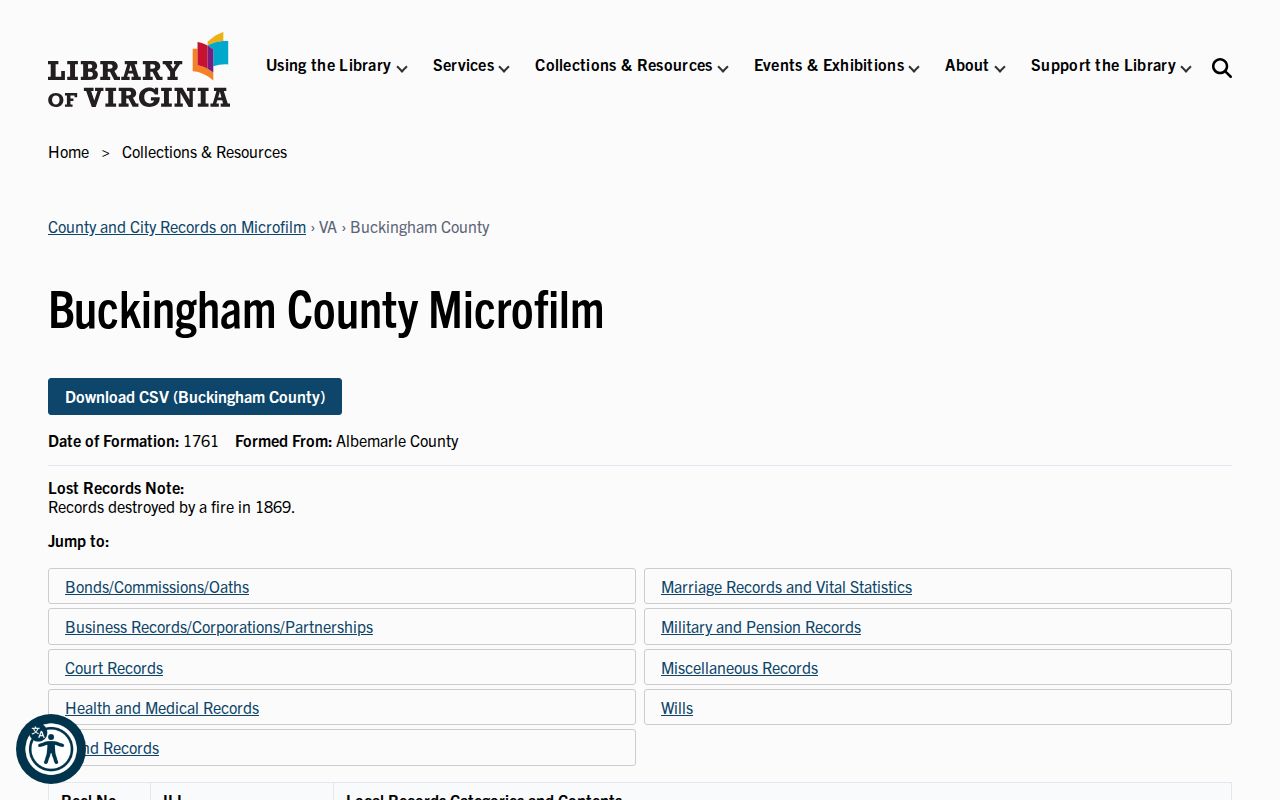
The guide image helps target a volume; it is not a sample deed result.
Walk Backward Through Buckingham Deeds
Rebuild an old chain one transfer at a time. The land stays constant while the party names keep shifting. Because the grantor-grantee index is organized by people or entities, every step must be checked against its legal description and book reference. A familiar surname is never a reason to stop.
- Start with the known deed and note the grantee, grantor, recording reference, date, and parcel description.
- Search the grantee as a grantor in the next earlier conveyance, then compare the tract calls.
- Search the new grantor as a prior grantee and repeat until the index or records end.
- Record gaps, corrections, releases, partitions, and estate deeds instead of skipping them.
- Grantor
- The prior party who conveyed the stated interest.
- Grantee
- The party named as receiver of that interest.
- Chain of title
- The ordered links of recorded transfers tied to the same land.
- Reverse index
- A search route that follows a prior grantee back to a grantor.
- Quitclaim and warranty
- Different deed forms; read the instrument rather than infer the scope from its label.
Match Old Buckingham Land Descriptions
A modern address may not have existed when an old transfer was recorded. Earlier Buckingham deeds identify a tract by acreage, adjoining owners, roads, water, a farm name, or metes-and-bounds calls. Compare the full description against a plat and survey book. Do this before tying it to a current Map#. After road renaming or postal changes, a street name alone can point to a different parcel.
Surveyor books listed by LVA reach into the eighteenth century. The original Surveyors' Plat Book covers 1762–1858. Buckingham was formed from Albemarle County in 1761. A pre-formation transfer may belong to the parent county because of that. A boundary property may also pull a deed chain into a neighboring jurisdiction. Use these records to fix the land's location. Then return to the deed books for recorded ownership.
The 1869 Fire Limits Former Owners
The 1869 courthouse fire is the central break in Buckingham's land history. LVA's post-fire deed sequence opens with Book 1, 1869–1872. Later listed volumes run through Book 10, 1899–1901, with more books in later years. Once a chain touches the fire, stop the simple index walk. Turn instead to surveyor material and Albemarle records for earlier periods. State land-grant sources and neighboring county deed records also help.
The pre-1869 record is not wholly gone, though. A 2024 LVA inventory documented loose items in courthouse storage. These included an 1856 clerk's journal and land-tax books from 1859 and 1834. Treat that inventory as a lead, not proof that a specific deed survived. Ask the custodian directly. Any loose item still has to be authenticated and tied to the tract. Only then does it count.
Buckingham Surveys Reach 1762
The LVA catalog lists Surveyor's Books from 1762–1814, plus other runs including 1872–1909 and 1914–1915. The original Surveyors' Plat Book, covering 1762–1858, is listed as well. Together these help identify adjoining land, old road calls, and a tract's historic shape. That matters when an earlier deed carries no modern street address.
A survey shows land measurement or description, not necessarily a change in ownership. Pair it with deed and probate files. The county's historical guide also lists land books for 1930 and 1931. It adds judgment-lien dockets for 1878–1909 and 1966–1976. Those series add context around an earlier owner without replacing the conveyance itself.
Search the LVA Buckingham series list by record type and date.
Probate Can Break a Buckingham Name Chain
Probate often explains a break in a Buckingham name chain. An owner may die before the next deed reaches the recorder. The Circuit Clerk then holds the paper trail. That trail includes the will, an executor's qualification, inventories, fiduciary deeds, lists of heirs, partition orders, and deeds of distribution. Later instruments may name the estate or a representative instead of the deceased owner. Trace that legal role back to the parcel description and the chain holds together.
Vital records can support the timeline. Virginia opens birth records after 100 years. Death, marriage, and divorce records open after 25 years. Restricted certificates generally require immediate-family eligibility with ID. The VDH route lists a $15 search or certificate charge. Processing takes roughly two weeks. A death record fixes a date, though it never transfers land itself. Virginia Vital Records access options
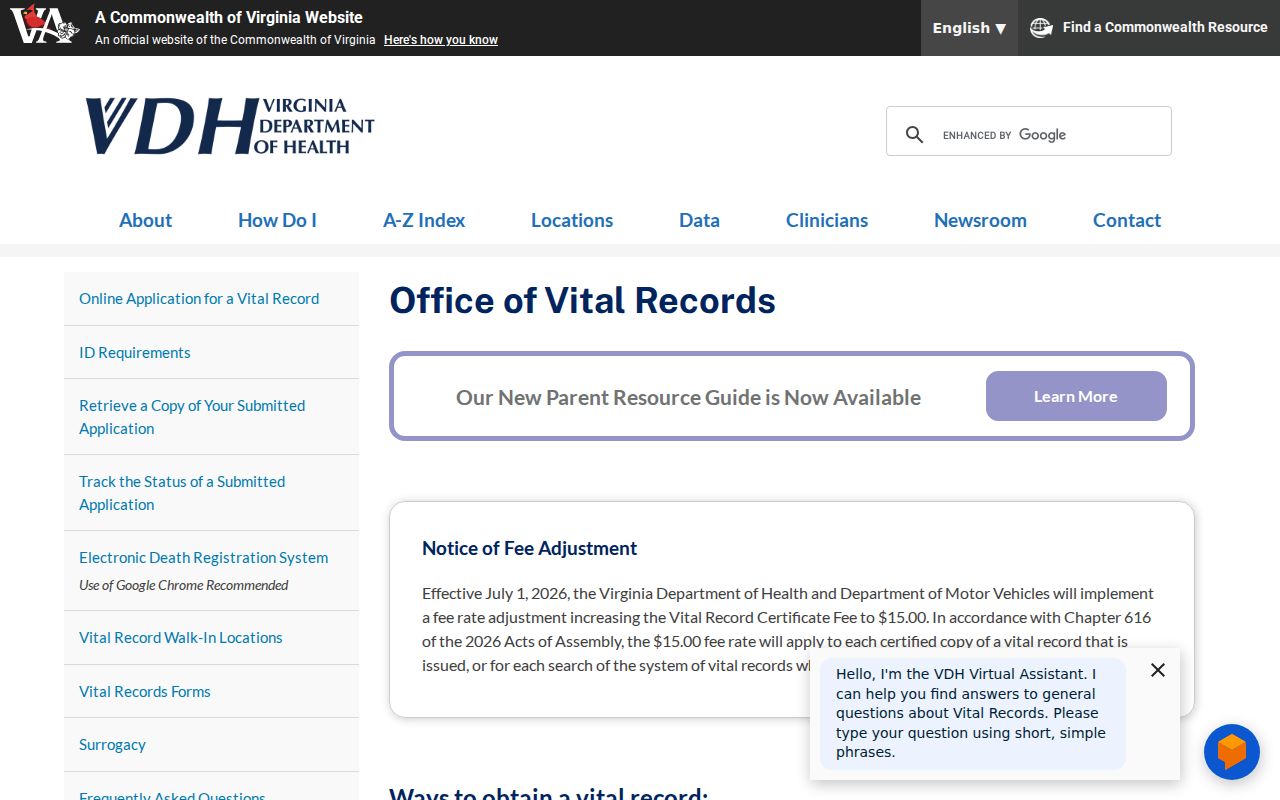
Virginia's state vital-record office manages that certificate route, while probate and deed files stay with the Circuit Clerk. Virginia's accepted-ID guide spells out the identification and relationship requirements for restricted certificates.
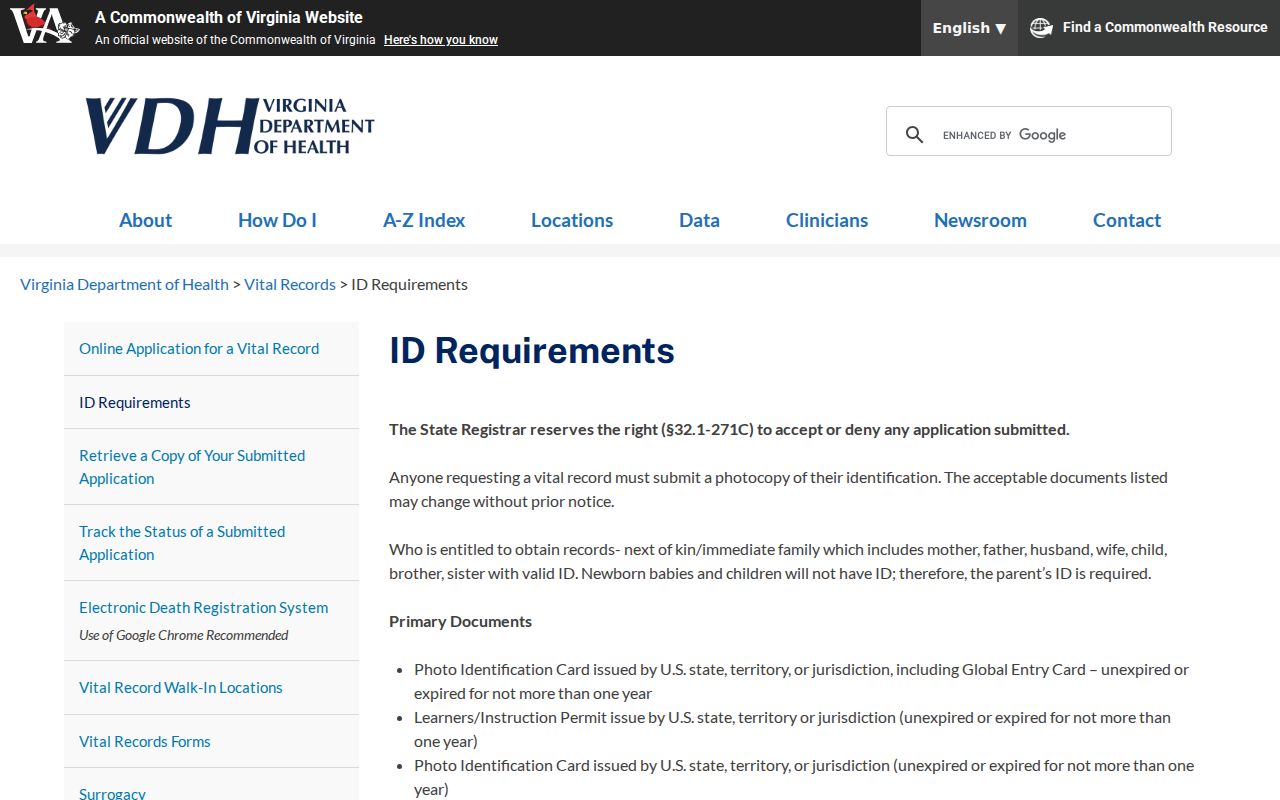
Check eligibility before ordering a death or marriage record, since a certificate aids research but conveys no land.
Loose Buckingham Records May Survive
Loose records may survive in the Buckingham courthouse basement. The Library of Virginia's 2024 inventory report described pre-1869 loose items there. These include an 1856 clerk's journal and land-tax books from 1859 and 1834. The older book was folded inside the 1859 volume. That detail raises a practical question for the Clerk. Can unprocessed material or a finding aid be checked for the period and surname at issue?
Do not assume a missing deed sits among these items unless the custodian confirms it. The books are tax materials, not a guaranteed title chain. The 1869 fire still marks a major gap. Treat the LVA account as a lead that narrows an archival inquiry. Read the Library of Virginia's Buckingham inventory story.
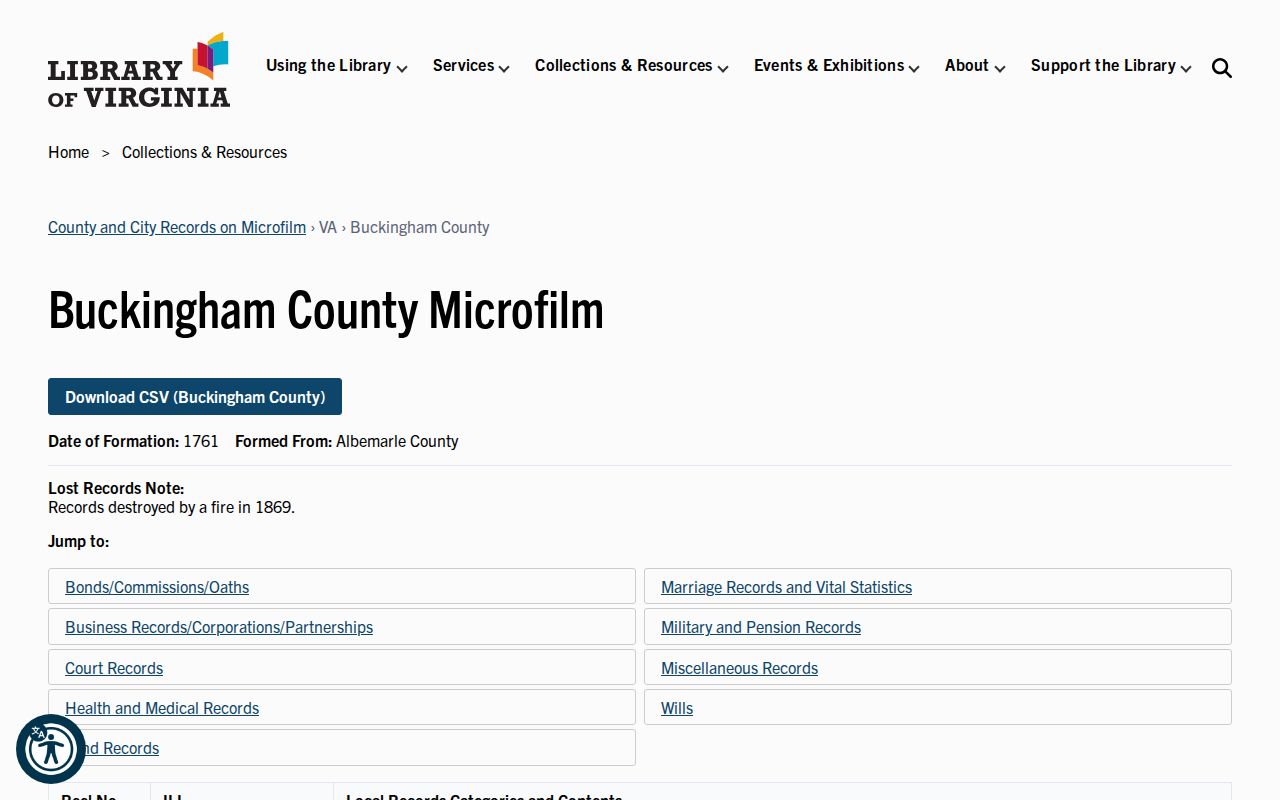
Compare the finding aid's post-fire book and index runs against this archival lead.
Search Buckingham's Name Index With a Date Range
A former-owner search starts with direction. Grantor or grantee? The grantor direction follows an owner out of the parcel. The grantee direction follows an incoming transfer. Use the index years the Library of Virginia documents as a starting point, but know that Buckingham's grantee Volume E segment for 1908–1949 is incomplete. Ask the Circuit Clerk whether another volume, original index, or instrument run covers the gap that matters to your parcel.
Give the Clerk every hook you have. Alternate spellings help. So do middle initials, older road names, and adjoining owners. A common surname can pull back unrelated deeds by the dozen. A prior book and page, an approximate recording year, or a legal-description phrase will narrow the request fast. Virginia's Secure Remote Access site does not guarantee complete later-year coverage or a full image set, so never read an empty online result as an exhaustive search.
Use Buckingham Tax and Survey Books Before 1869
When the deed chain crosses before the 1869 courthouse fire, hunt for evidence that describes the land. Conveyance books are gone. The Library of Virginia lists surveyor books from 1762. It also lists a surviving plat book covering 1762–1858. Its inventory also reported the 1859 land-tax book holding an 1834 volume, plus an 1856 clerk's journal. These are archival leads, not an owner-by-owner deed sequence. The county's earlier boundary history may point into Albemarle records. Buckingham formed from Albemarle in 1761.
To tie an early name to a present parcel, match the old tract's metes and bounds, watercourses, road calls, and adjoining owners against a later deed or survey. Record the source title and page so the Clerk or archivist can verify the reference. A land-tax name shows a historical tax-era association only. It proves neither a conveyance nor modern title. Read the Library of Virginia's report on Buckingham's loose archival material.
How Far Buckingham Ownership Reaches
How far back can a Buckingham ownership search go? The surviving deed and index trail begins after the 1869 courthouse fire. Survey material reaches to 1762, and the county itself formed from Albemarle in 1761. Those dates describe different record series, not one continuous story. The deed index offers no unbroken chain to county formation, and the incomplete 1908–1949 grantee segment belongs in any title history. Ask the Clerk and the LVA about the specific year, book, and description needed.
Lawful use. Former-owner research is for land history, title preparation, and property diligence. Do not use records to track, threaten, or harass a living person.